


How fast does a 7kW home EV charger charge?
A 7kW home charger adds around 30 to 40 miles of range per hour. Here is what that means for every common EV on the road in 2026.
Written by Kyran Lacey, NAPIT-Certified Electrician
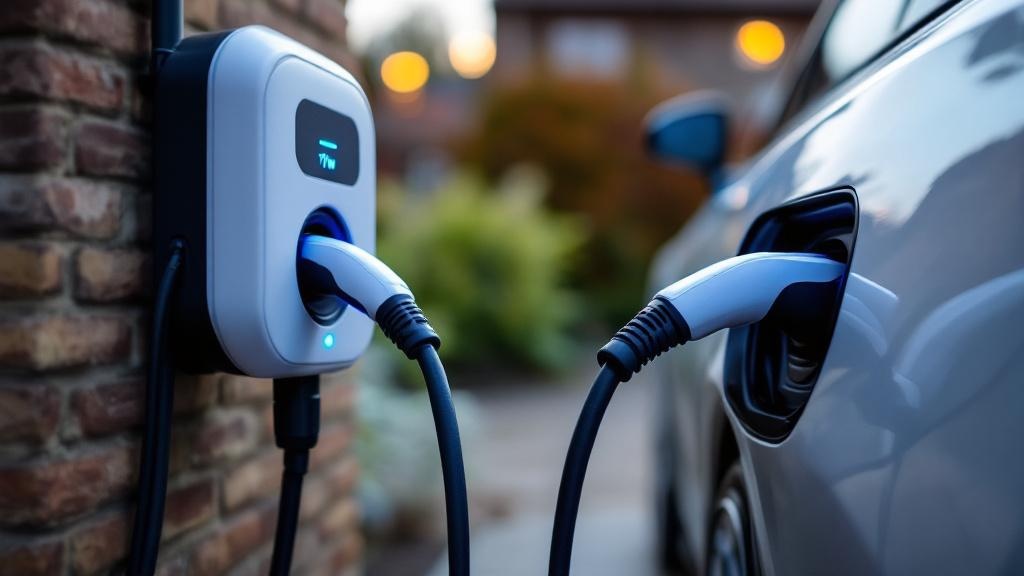
A 7kW home EV charger adds roughly 30 to 40 miles of range per hour of charging. Plugged in for 8 hours overnight, most EVs on the road in 2026 will be fully charged by morning.
How does charging speed work?
Charging speed depends on two things: the output of your charger and the maximum AC charging rate your vehicle accepts. A 7kW charger (the standard home unit) delivers 7 kilowatts of power per hour. Most modern EVs accept 7kW AC charging, so you get the full benefit. Some older EVs cap at 3.7kW, meaning a 7kW charger will only charge at 3.7kW regardless.
Real-world charging times for common EVs
These are approximate times for a full charge from near-empty at 7kW:
- Tesla Model 3 (75kWh): around 11 hours
- Volkswagen ID.4 (77kWh): around 11 hours
- Nissan Leaf (40kWh): around 6 hours
- BMW i4 (84kWh): around 12 hours
- Kia EV6 (77kWh): around 11 hours
- Vauxhall Corsa Electric (50kWh): around 7 hours
Most drivers do not start from zero. If you drive 40 miles a day, you are using roughly 12 to 15kWh. A 7kW charger replenishes that in under 2.5 hours.
How does a 7kW charger compare to a 3-pin socket?
A standard 13A 3-pin socket delivers around 2.3kW. That adds roughly 8 miles of range per hour. Charging a 75kWh battery from near-empty would take over 30 hours. A 7kW dedicated charger is approximately 3 times faster, which is why it is the standard recommendation for home use.
What about 22kW home chargers?
22kW three-phase chargers exist but require three-phase electricity supply, which most UK homes do not have. For domestic properties with single-phase supply, 7kW is the maximum available. Three-phase supply is more common in commercial premises.
Does charging speed affect battery health?
AC charging at 7kW is considered gentle on battery health. DC rapid charging (50kW to 350kW at public chargers) is faster but generates more heat, which over thousands of cycles can reduce battery longevity. Overnight charging at home at 7kW is the healthiest daily routine for your battery.
If you are ready to install a 7kW home charger, we carry out free in-person site surveys across the Chilterns. See our EV charger installation service in High Wycombe, EV charger installation in Princes Risborough, and EV charger installation in Marlow.
Common questions
Ready to get a quote for EV Charger Installation?
We cover the Chilterns: Amersham, Chesham, Great Missenden, Wendover, Princes Risborough, and surrounding areas. Free in-person site survey included.
Questions about your project?
Call us or book a free site survey. We are local to the Chilterns and happy to talk through any installation before you commit.
Monday to Saturday 08:00 to 19:00. Local Chilterns team. We come to you.