


How does an air source heat pump work?
An air source heat pump extracts heat from outside air and uses it to heat your home and hot water. Here is how the technology works and whether it is right for your property.
Written by Kyran Lacey, NAPIT-Certified Electrician
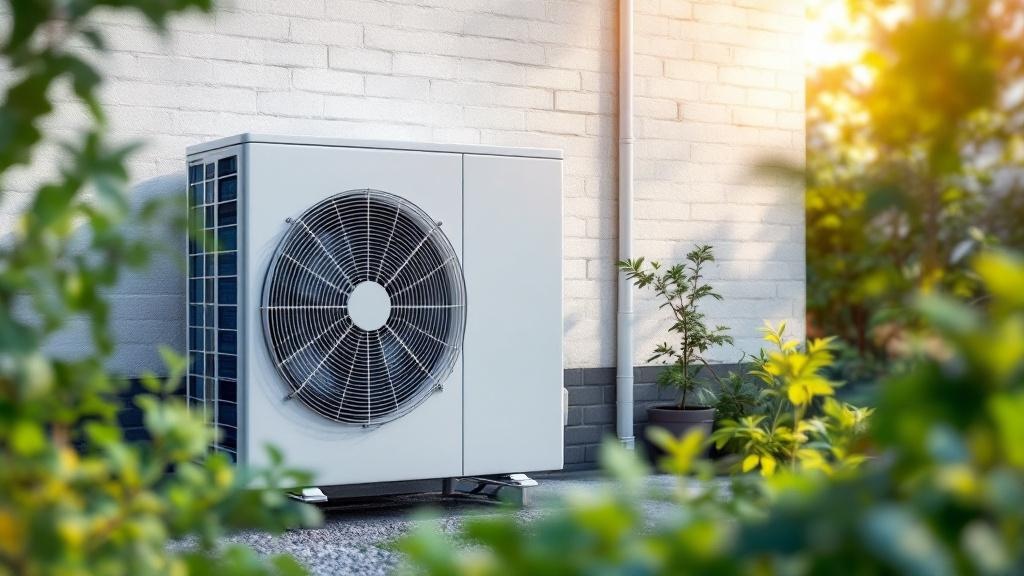
An air source heat pump extracts warmth from outside air and concentrates it to heat your home. This works even when it is cold outside: air at 0°C still contains useful heat energy that a heat pump can capture.
What is the basic principle?
A heat pump works on the same principle as a refrigerator, but in reverse. A fridge extracts heat from inside the cabinet and dumps it into your kitchen. A heat pump extracts heat from outside air and pumps it into your home.
The key components are:
- Outdoor unit. A fan draws outside air across a refrigerant-filled coil. The refrigerant absorbs heat from the air and evaporates.
- Compressor. The refrigerant vapour is compressed, which raises its temperature significantly.
- Heat exchanger. The hot compressed refrigerant transfers its heat to your central heating water.
- Expansion valve. The refrigerant cools and returns to liquid, ready to absorb more heat from outside.
What is the Coefficient of Performance?
The Coefficient of Performance (COP) measures how efficiently a heat pump works. A COP of 3 means the heat pump produces 3kWh of heat for every 1kWh of electricity it uses. Gas boilers have a COP of less than 1.
In mild UK conditions (5°C to 15°C), a well-installed heat pump achieves COP values of 3 to 4. In colder conditions (below 0°C), COP drops but remains above 2 for modern units. The Seasonal COP (SCOP) accounts for year-round performance and is the most useful benchmark: aim for SCOP 3.0 or higher.
What temperature does a heat pump produce?
A heat pump heats your central heating water to around 35°C to 55°C. A gas boiler typically runs at 65°C to 75°C. This lower flow temperature is why heat pumps work best with larger radiators or underfloor heating, which are designed for lower temperature operation.
If your existing radiators are undersized for lower flow temperatures, they can be upgraded as part of the installation. This is one of the factors your installer should assess at the site survey.
Does a heat pump work in cold weather?
Yes. Modern heat pumps continue to operate effectively down to -15°C to -25°C (depending on the model). UK winters rarely drop below -5°C in the Chilterns, so cold-weather performance is not a concern for most properties here.
Does a heat pump replace my boiler entirely?
In most cases, yes. An air source heat pump handles both space heating and hot water, replacing your boiler and potentially your hot water cylinder. A separate hot water cylinder is normally required as heat pumps heat water more slowly than a boiler and need a storage tank to meet peak demand.
We install air source heat pumps across the Chilterns and handle the Boiler Upgrade Scheme grant on your behalf. Every installation starts with a free suitability check. See our heat pump installation in Tring and heat pump installation in Berkhamsted.
Common questions
Ready to get a quote for Heat Pump Installation?
We cover the Chilterns: Amersham, Chesham, Great Missenden, Wendover, Princes Risborough, and surrounding areas. Free in-person site survey included.
Questions about your project?
Call us or book a free site survey. We are local to the Chilterns and happy to talk through any installation before you commit.
Monday to Saturday 08:00 to 19:00. Local Chilterns team. We come to you.